Benefits of Network Security Forensics

The networks that your business operates on are often open and complex.

Your IT department is responsible for mitigating network risks, managing performance and auditing data to ensure functionality.

Using NetFlow forensics can help your IT team maintain the competitiveness and reliability of the systems required to run your business.

In IT, network security forensics involves the monitoring and analysis of your network’s traffic to gather information, obtain legal evidence and detect network intrusions.

These activities help keep your company perform the following actions.

  • Adjust to increased data and NetFlow volumes
  • Identify heightened security vulnerabilities and threats
  • Align with corporate and legislative compliance requirements
  • Contain network costs
  • Analyze network performance demands
  • Recommend budget-friendly implementations and system upgrades

NetFlow forensics helps your company maintain accountability and trace usage; these functions become increasingly difficult as your network becomes more intricate.

The more systems your network relies on, the more difficult this process becomes.

While your company likely has standard security measures in place, e.g. firewalls, intrusion detection systems and sniffers, they lack the capability to record all network activity.

Tracking all your network activity in real-time at granular levels is critical to the success of your organization.

Until recently, the ability to perform this type of network forensics has been limited due to a lack of scalability.

Now, there are web-based solutions that can collect and store this data to assist your IT department with this daunting task.

Solution capabilities include:

  • Record NetFlow data at a micro level
  • Discover security breaches and alert system administrators in real-time
  • Identify trends and establish performance baselines
  • React to irregular traffic movements and applications
  • Better provisioning of network services

The ability to capture all of this activity will empower your IT department to provide more thorough analysis and take faster action to resolve system issues.

But, before your company can realize the full value of NetFlow forensics, your team needs to have a clear understanding of how to use this intelligence to take full advantage of these detailed investigative activities.

Gathering the data through automation is a relatively simple process once the required automation tools have been implemented.

Understanding how to organize these massive amounts of data into clear, concise and actionable findings is an additional skill set that must be developed within your IT team.

Having a team member, whether internal or via a third-party vendor, that can aggregate your findings and create visual representations that can be understood by non-technical team members is a necessary part of NetFlow forensics. It is important to stress the necessity of visualization; this technique makes it much easier to articulate the importance of findings.

In order to accurately and succinctly visualize security issues, your IT staff must have a deep understanding of the standard protocols of your network. Without this level of understanding, the ability to analyze and investigate security issues is limited, if not impossible.

Utilizing a software to support the audit functions required to perform NetFlow forensics will help your company support the IT staff in the gathering and tracking of these standard protocols.

Being able to identify, track and monitor the protocols in an automated manner will enhance your staff’s ability to understand and assess the impact of these protocols on network performance and security. It will also allow you to quickly assess the impact of changes driven by real-time monitoring of your network processes.

Sound like a daunting task?

It doesn’t have to be. Choose a partner to support your efforts and help you build the right NetFlow forensics configuration to support your business.

8 Keys to Understanding NetFlow for Network Security, Performance & Overall IT Health

Cyberwar Defense using Predictive AI Baselining

The world is bracing for a worldwide cyberwar as a result of the current political events. Cyberattacks can be carried out by governments and hackers in an effort to destabilize economies and undermine democracy. Rather than launching cyberattacks, state-funded cyber warfare teams have been studying vulnerabilities for years.

An important transition has occurred, and it is the emergence of bad actors from unfriendly countries that must be taken seriously. The most heinous criminals in this new cyberwarfare campaign are no longer hiding. Experts now believe that a country could conduct more sophisticated cyberattacks on national and commercial networks. Many countries are capable of conducting cyberattacks against other countries, and all parties appear to be prepared for cyber clashes.

So, how would cyberwarfare play out, and how can organizations defend against them?

The first step is to presume that your network has been penetrated or will be compromised soon, and that several attack routes will be employed to disrupt business continuity or vital infrastructure.

Denial-of-service (DoS/DDoS) attacks are capable of spreading widespread panic by overloading network infrastructures and network assets, rendering them inoperable, whether they are servers, communication lines, or other critical technologies in a region.

In 2021, ransomware became the most popular criminal tactic, but country cyber warfare teams in 2022 are now keen to use it for first strike, propaganda and military fundraising. It is only a matter of time before it escalates. Ransomware tactics are used in politically motivated attacks to encrypt computers and render them inoperable. Despite using publicly accessible ransomware code, this is now considered weaponized malware because there is little to no possibility that a key to decode will be released. Ransomware assaults by financially motivated criminals have a different objective, which must be identified before causing financial and social damage, as detailed in a recent RANSOMWARE PAPER

To win the cyberwar on either cyber extortion or cyberwarfare attacks, you must first have complete 360-degree view into your network and deep transparency and intelligent context to detect dangers within your data.

Given what we already know and the fact that more is continually being discovered, it makes sense to evaluate our one-of-a-kind integrated Predictive AI Baselining and Cyber Detection solution.

YOU DON’T KNOW WHAT YOU DON’T KNOW!

AND IT’S WHAT WE DON’T SEE THAT POSES THE BIGGEST THREATS AND INVISIBLE DANGERS!

You may be surprised to learn that most tools lack the REAL Visibility that could have prevented attacks on a network and its local and cloud-connected assets. There are some serious shortcomings in the base designs of other flow solutions that result in their inability to scale in retention.

This is why smart analysts are realizing that Threat Intelligence and Flow Analytics today are all about having access to long-term granular intelligence. From a forensics perspective, you would appreciate that you can only analyze the data you retain, and with large and growing network and cloud data flows most tools (regardless of their marketing claims) actually cannot scale in retention and choose to drop records in lieu of what they believe is salient data.

Imputed outcome data leads to misleading results and missing data causes high risk and loss!

Funnel_Loss_Plus_Text

So how exactly do you go about defending your organizations network and connected assets?

Our approach with CySight focuses on solving Cyber and Network Visibility using granular Collection and Retention with machine learning and A.I.

CySight was designed from the ground up with specialized metadata collection and retention techniques thereby solving the issues of archiving huge flow feeds in the smallest footprint and the highest granularity available in the marketplace.

Network issues are broad and diverse and can occur from many points of entry, both external and internal. The network may be used to download or host illicit materials and leak intellectual property.

Additionally, ransomware and other cyber-attacks continue to impact businesses. So you need both machine learning and End-Point threats to provide a complete view of risk.

The Idea of flow-based analytics is simple yet potentially the most powerful tool to find ransomware and other network and cloud issues. All the footprints of all communications are sent in the flow data and given the right tools you could retain all the evidence of an attack or infiltration or exfiltration.

However, not all flow analytic solutions are created equal and due to the inability to scale in retention the Netflow Ideal becomes unattainable. For a recently discovered Ransomware or Trojan, such as “Wannacry”, it is helpful to see if it’s been active in the past and when it started.

Another important aspect is having the context to be able to analyze all the related traffic to identify concurrent exfiltration of an organization’s Intellectual Property and to quantify and mediate the risk. Threat hunting for RANSOMWARE requires multi-focal analysis at a granular level that simply cannot be attained by sampling methods. It does little good to be alerted to a possible threat without having the detail to understand context and impact. The Hacker who has control of your system will likely install multiple back-doors on various interrelated systems so they can return when you are off guard.

CySight Turbocharges Flow and Cloud analytics for SecOps and NetOps

As with all CySight Predictive AI Baselining analytics and detection, you don’t have to do any heavy lifting. We do it all for you!

There is no need to create or maintain special groups with Ransomware or other endpoints of ill-repute. Every CySight instance is built to keep itself aware of new threats that are automatically downloaded in a secure pipe from our Threat Intelligence qualification engine that collects, collates, and categorizes threats from around the globe or from partner threat feeds.

CySight Identifies your systems conversing with Bad Actors and allows you to backtrack through historical data to see how long it’s been going on.

Summary

IdeaData’s CySight software is capable of the highest level of granularity, scalability, and flexibility available in the network and cloud flow metadata market and supports the broadest range of flow-capable vendors and flow logs.

CySight’s Predictive AI Baselining, Intelligent Visibility, Dropless Collection, automation, and machine intelligence reduce the heavy lifting in alerting, auditing, and discovering your network making threat intelligence, anomaly detection, forensics, compliance, performance analytics and IP accounting a breeze!

Let us help you today. Please schedule a time to meet https://calendly.com/cysight/

The Internet of Things (IoT) – pushing network monitoring to its limits

In the age of the Internet of Things (IoT), billions of connected devices – estimated at 20 billion by the year 2020 – are set to permeate virtually every aspect of daily life and industry. Sensors that track human movement in times of natural disasters, kitchen appliances reminding us to top up on food supplies and even military implementations such as situational awareness in wartime are just a few examples of IoT in action.

Exciting as these times may be, they also highlight a new set of risk factors for Security Specialists who need to answer the call for more vigorous, robust and proactive security solutions. Considerations around security monitoring and management are set to expand far beyond today’s norms as entry points, data volumes and connected hardware multiply at increasing rates in the age of hyper-interconnectedness.

Security monitoring will need to take a more preemptive stance in the age of IoT

With next-generation smart products being used in industries such as utilities, manufacturing, transportation, insurance, and logistics, networks will become exposed to new security vulnerabilities as IoT and enterprises intersect. Smart devices connected to the enterprise can easily act as a bridge to the network, potentially exposing organizations’ information assets. Apply this scenario to a world where virtually every device can communicate with the network from practically anywhere, and the need for more forward-thinking security monitoring becomes apparent. Device-to-device communications will need stronger encryption and ways for network teams to monitor and understand communications, behavior and data patterns. With more “unmanned” computers, appliances and devices coming on-line, understanding new network anomalies will be a challenge.

Networks will become far more heterogeneous

Embedded firmware, operating systems, shorter life-cycles, expanding capabilities and security considerations unique to IoT devices, will make networks far more complex and expansive than what they are today. IoT will hasten more heterogeneous environments, which security teams must be prepared for. The device influx will also drive IPv6 adoption and introduce new protocols. According to Technology.org, “Enterprises will have to look for solutions capable of guarding data gateways in IoT devices using tailored protocol filters and policy capabilities. Besides, regular security updates and patches will become integral to product lifecycle to eliminate every possibility of a compromise.”  This will increase reliance on technologies such as granular Netflow collection that provides forensics and anomaly detection, which offers enterprises, trusted security solutions that are both easily deployed and capable of evolving organically alongside new technologies as they are introduced to environments.

IoT will introduce new types of data into the enterprise

Traffic signal systems, power stations, water sanitation plants and other services vital to society are all incorporating IoT to some degree. Device security in a physical and non-physical context will be important as enterprises need to look at ways of preventing unauthorized entry into the network. Gartner asserts that, “IoT objects possess the ability to change the state of the environment around them, or even their own state (for example, by raising the temperature of a room automatically once a sensor has determined it is too cold, or by adjusting the flow of fluids to a patient in a hospital bed based on information about the patient’s medical records)”.

Considering the risk to human life inherent in hacks into systems of this nature, the level of monitoring and surveillance for compliance is becoming more pertinent each day as these kinds of threats are starting to occur. This will place a high demand on end-point security solutions to be both timely and accurate in its correlation of network data to give Security Teams the needed granularity to provide context around current and evolving risks.

The now infamous Chrysler hack is a primary example of the potentialities of IoT-based breaches and the threats they pose to human safety.

The role of Netflow in forearming the enterprise in the age of IoT

Monitoring systems will be required to identify, categorize and alert Network Operations Centers (NOCs) on a plethora of new datasets, demanding big data capabilities from their network monitoring solutions. NetFlow, if used correctly, can offer an opportunity to provide enterprises with substantial intelligence and an early warning mechanism to assist them in managing the steady move toward IoT and take a forearmed stance in security operations. Netflow’s ability to match to the scale at which the enterprise will grow means NOCs will neutralize the threat of being overwhelmed in a deluge of devices that will generate volumes of data that require around the clock monitoring.

They can achieve deep visibility – central to security in an IoT world – with a NetFlow monitoring, reporting and analysis tool that provides the ability to perform deep security forensics and intelligent baselining, anomaly detection, diagnostics and endpoint threat detection. NetFlow end-point solutions speak to the changing needs of the large environments by reducing Mean Time to Know (MTTK), which in turn shrinks Mean Time to Repair and Resolve (MTTR).

For more information on how CySight is helping organizations build comprehensive network security, performance and management solutions, contact us, or download a free copy of our guide on 8 Keys to Understanding NetFlow for Network Security, Performance & Overall IT Health.

 8 Keys to Understanding NetFlow for Network Security, Performance & Overall IT Health

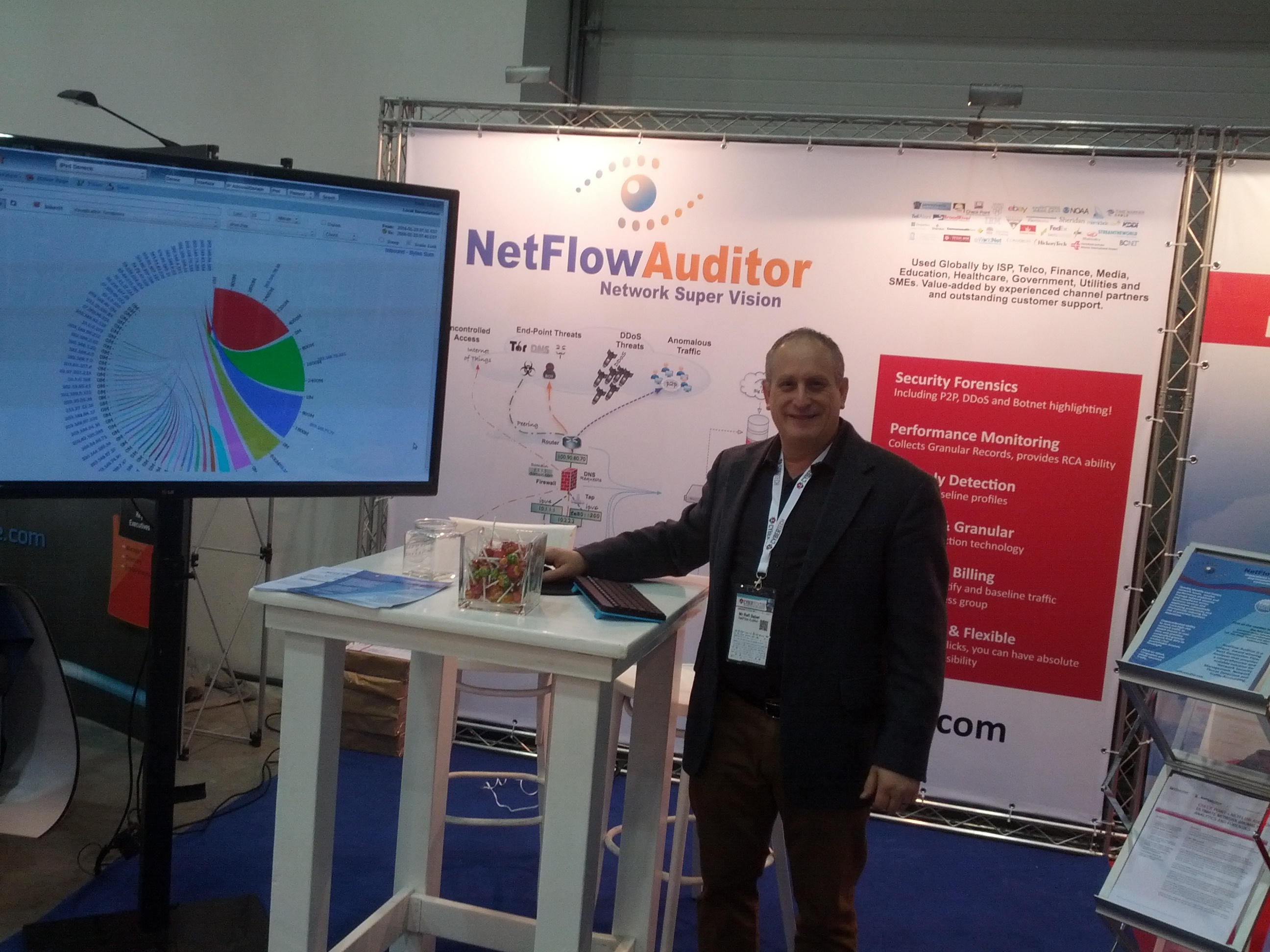
CySight @ CyberTech

Last week we presented CySight at CyberTech in Tel Aviv, Israel. Cybertech is the most significant conference and exhibition of cyber technologies outside of the United States.
Israel is building a name for itself as the global center of cybersecurity and we have a unique network intelligence solution that fits the Israeli cybersecurity vision. CySight’s unique approach to delivering granular Network Security Forensics, Intelligent Behavior Anomaly Detection and Diagnostics and End-Point Threat Detection was appreciated by the “who’s who” of the Israeli Cyber community that intimately understand the need for granular network intelligence and threat mitigation.
The candidness, openness and warmth of the Israeli community has to be experienced and I cannot begin to express my gratitude for all the intelligencia and warm wishes from those who visited our stand. CySight already enhances Check Point firewalls with CySight providing a joint solution with Check Point providing ultimate network anomaly analytics and forensics (https://www.checkpoint.com/downloads/sb-checkpoint-netflow.pdf). We look forward to CySight becoming a valuable part of the Israeli Cybersecurity space and contributing to its defense.
 

CySight has been building innovative network analytics solutions for the Enterprise and ISP/Telco marketplace since 1995. At the World Congress of IT in 2002 our early concepts won multiple awards for Security and Business Intelligence for our DigiToll software and we continue to deliver and extend our superior network forensics and detection technology. Our objectives are to keep creating tools that build a safer Internet with unique methods to identify and mitigate undesirable traffic.

CySight is a premier flow-analytics solution providing extreme visibility eliminating network blindspots. Anomaly detection and end-point threat intelligence coupled with unique granularity for high-compliance meta-data retention and security forensics help organizations reduce risks associated with inappropriate and malicious traffic and poor performance. Trusted globally by the largest companies for its scalability and flexible analytics. Perpetual diagnostics enable fast mitigation from DDoS, insider threats, botnets, illicit transfers and other bad actors.
Useful links:
8 Keys to Understanding NetFlow for Network Security, Performance & Overall IT Health

How to Achieve Security and Data Retention Compliance Obligations with Predictive AI Cyber Flow Analytics

Information retention, protection and data compliance demands are an important concern for modern organizations. And with data being generated at staggering rates and new entry points to networks (mobile devices, wireless network, etc.) adding their own levels of complexity, adherence to compliance obligations can prove challenging. In addition, when considering high profile network hacks such as the Sony, Dropbox and Target intrusions, it quickly becomes clear that no organization is immune to the possibility of having their systems compromised. This backdrop demonstrates the importance of finding a suitable network monitoring solution that is able to navigate the tightrope between meeting regulatory requirements without placing too much strain on hardware resources.

In this blog we’ll touch on two of these regulatory standards: the Health Insurance Portability and Accountability Act (HIPAA) and Supervisory Control and Data Acquisition (SCADA), and look at how Network Specialists can leverage NetFlow’s ability to provide insightful metrics that aid in the building of a water-tight security apparatus.

NetFlow and HIPAA

Few have greater concerns around information privacy than the health care industry. If compromised, medical records containing patients’ sensitive information can lead to disaster for both health care organizations and individuals. The Privacy Rule, as stipulated by HIPAA, addresses the data retention compliance and protection measures expected of health care organizations to ensure critical patient records remain safe, uncompromised and reliable.

One of these protection measures is the continuous monitoring of information systems to prevent security breaches or unintended exposure of information to the wrong people. NetFlow is ideal for monitoring and enforcing security by giving detailed insight into both local, inbound and outbound traffic. It also allows you to easily identify the nature of the traffic and see how traffic flows between devices as it traverses your environment.

NetFlow’s ability to detect and report on anomalies through analysis by a NetFlow analyzer can give health care organizations unmatched network visibility and data granularity. Its availability on most networking devices makes it ideal for deployment in and monitoring of large-scale environments such as hospitals and other health care facilities. Also, flow exports to NetFlow analyzers are comparatively lightweight, which makes it possible for organizations to collect and store network audit data for extended periods of time.

NetFlow and SCADA

SCADA is a standard that facilitates communication channels between remote equipment as a means to control their functions. Examples of SCADA at work are remote management of Heating Ventilation and Air Conditioning (HVAC) systems, industrial equipment and Closed Circuit Television systems. SCADA is a type of industrial control system (ICS). Security around SCADA-enabled systems are paramount to human safety, as typical utilization of SCADA include sewerage systems, power plant and water treatment facilities. Also, these management systems typically communicate via the Internet, making them vulnerable to hackers who may seek to use them as entry points into corporate networks.

NetFlow provides built-in support for SCADA and facilitates real-time monitoring and management of communication between remote devices, making it possible to take corrective action on-the-fly if needs be. It also enables users to make operational decisions based on both real-time and historic data that gives context to anomalies and events as they occur. Users are also able to perform functions remotely without visiting sites to perform updates and other maintenance tasks. By providing detailed and up-to-date information on business-critical systems, NetFlow is enabling businesses to be more proactive in the monitoring, management and maintenance of remote devices and systems.

Employing the right NetFlow reporting tool is key to manage compliance obligations

The missing link in leveraging the power of NetFlow in data retention and protection efforts is a powerful, comprehensive and robust NetFlow reporting tool. When considering your regulatory obligations, ensure that your choice of NetFlow reporting tool gives you the detailed, granular and contextual information you need to make insightful, data-driven decisions around the security, integrity and stability of your information assets.

8 Keys to Understanding NetFlow for Network Security, Performance & Overall IT Health